Beware of Mama Bears

Read: Proverbs 17:12

Better to meet a she-bear robbed of its cubs than to encounter a fool immersed in folly (Proverbs 17:12, author’s translation).

Some years ago Tommy and Ray Magliozzi (beloved hosts of NPR’s CarTalk) sponsored a contest called “Famous Last Words.” Here were some of the contenders:

Are you sure the power is off?

Pull the pin and count to what?

These are the good kind of mushrooms.

What does THIS button do?

However, the hands-down winner, in my opinion, was this one:

I wonder where the mother bear could be?

Getting between a mother bear and her cubs is universally recognized as a bad idea. No—check that. It’s a phenomenally bad idea.

Yet, Proverbs 17:12 suggests that there is something that is even worse: encountering a fool immersed in folly. I would say that’s a pretty good indication of scale!

So, what’s so dangerous about coming face to face with a fool immersed in folly?

First, let’s talk about what the Bible means by “fool.” Unlike people who lack intelligence, fools may actually know better; they simply don’t care. Proverbs 2:22 says that this type of person “hates knowledge.” For whatever reason, the fool does not seem to care about consequences. Attracting attention and short-term gain seem to eclipse everything else.

Second, let’s admit that fools can sometimes be the life of the party. They’re often funny—and they invariably attract a crowd of admirers. They may tempt us to drop our guard. We may even catch ourselves smiling. The fool’s rants seem too ridiculous to be taken seriously.

But here is where the “mama bear” analogy is so instructive. When we’re wandering through the woods, our first instinct may be to say, “Oh, look at those adorable bear cubs!” No one would argue that they are not cute. But “cute” may be distracting us from danger, and that moment of distraction could cost us our life.

The power of this proverb is in the way it alerts us to the urgency of our situation. Immediate action is required; denial is not an option. We may choose to climb a tree. We may choose to run. (Tommy and Ray would remind us that we only have to be faster than the other guy.) But God help us, we’d better do something.

Ponder: Where have you encountered foolishness lately? How would you describe the danger? What do you plan to do about it?

Pray: Make us alert enough to see the danger and wise enough to know what to do about it. When the foolishness lies within us, then forgive us, and show us a more excellent way.

Who Are You Calling a Slacker?

Read: Proverbs 6:6-11

Go to the ant, you lazybones; consider its ways, and be wise. Without having any chief or officer or ruler, it prepares its food in summer, and gathers its sustenance in harvest. How long will you lie there, O lazybones? When will you rise from your sleep? A little sleep, a little slumber, a little folding of the hands to rest, and poverty will come upon you like a robber, and want, like an armed warrior (Proverbs 6:6-11, NRSV).

When I teach the book of Proverbs to my seminarians, I send them home with this assignment: Come to class with your two most favorite and your two most infuriating proverbs. Then we tally the results. Every year this passage from Proverbs 6:6-11 make an impressive showing on both sides of the ledger. Some people love it; other people hate it.

Those mixed reviews are not surprising. Every proverb is a kind of invitation. Dear reader, it says. Bring your own experience to this statement, and see if it rings true. Let’s talk!

I read this proverb to my husband, Tom, the other day over breakfast. (And now you’re thinking how much fun it must be to live with a Bible professor….) The first think I did was to paraphrase, since “lazybones” isn’t a term one hears much anymore. “Sluggard” isn’t much better, so I opted for “slacker,” which is a word very much in his repertoire.

Tom’s first response was, “Who are you calling a slacker?” It was early in the morning, but I had enough sense to realize that he was taking issue with the proverb and not with me.

There is a lot to take issue with in this proverb. Poverty, for instance, is much more complicated that this proverb implies. Systemic evils like racism crush even the most industrious. Even the proverbial ant can’t win against a heavy, well-aimed boot.

At the same time, there is much truth to this proverb’s claim. I thought of it when I was in the mountains of northwest Italy in the spring of 2020. (I know; poor me. Talk about privilege!) During the six weeks I was locked down in a little mountainside chalet, I watched my neighbor, Claudio, go out every day to work on his wood pile. By the end of June it was impressive; by the end of the summer, I’m told it was prodigious. But all that industry—day after day and log after log—meant that Claudio and his family could stay warm throughout the Alpine winter. Claudio is no slacker.

I find this proverb oddly comforting in the midst of the “groundhog day” effects of our second COVID winter. It’s easy to get lost in the seemingly endless cycle of small tasks. Considering the ant—and my neighbor Claudio—reminds me that they may all be adding up to something. There may be cumulative meaning in the mundane. Is that wisdom or wishful thinking? I’m praying it’s the former.

The author of this proverb invites us to “consider the ant…and be wise.” I can’t predict how you will respond if you accept that invitation. I will tell you this, however. Pay attention not just to the ways the proverb rings true for you, but for the ways it makes you uncomfortable. There is wisdom there, too.

Ponder: How do you respond to this proverb right now? What’s that about?

Pray: Give us the wisdom to know when to work and when to rest, O God, and give us faith when we feel like giving up.


“It’s Proverbial” Series Introduction:

Long before “reader response criticism” was a thing, the biblical proverbs issued their invitation to everyone within shouting distance. “What do you think about this?” they ask.

In this series, we will respond to that invitation. Our experiences may put us at odds with some proverbs, but that’s to be expected. Some of the proverbs even disagree with each other, so we probably shouldn’t lose any sleep over a few differences of opinion. The point is to enter into a discussion about what it means to live wisely, faithfully, and well. It’s a conversation that spans the centuries, and I hope you’ll accept the invitation to be part of it.

Enjoy!

Carol M. Bechtel

A Brave Prayer for a New Year

Read: Psalm 39

Lord, let me know my end, and what is the measure of my days; let me know who fleeting my life is (Psalm 39:4, NRSV).

This may not sound like a very “seasonal” psalm, but in fact, it is.

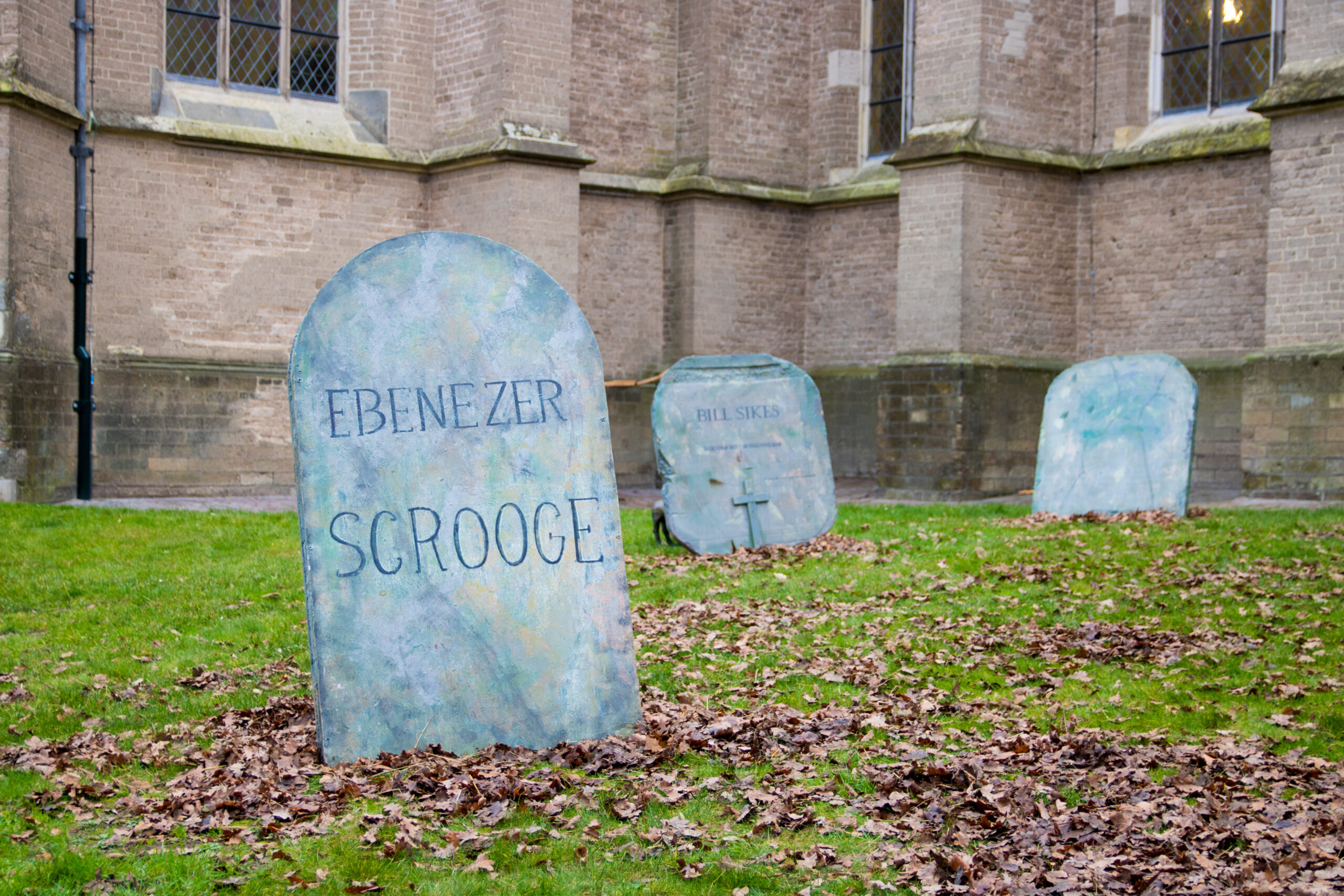
I refer you to Charles Dickens’ A Christmas Carol—remembering especially the part where the Ghost of Christmas Future takes Scrooge on a tour of the graveyard. There’s nothing like the site of your own name on a headstone to make you sufficiently sensible of conditions!

The author of Psalm 39 actually asks God to give him that kind of a moment. “Teach me to know my end,” he prays. “Let me know how fleeting my life is.”

That’s a brave prayer. When we recognize this, it helps us cut the psalmist some slack when, elsewhere in the psalm, he seems to drift perilously close to despair. I’m thinking of verse eleven, for instance, when he compared God to a “consuming moth.” Or even better, at the end of the psalm, when he winds up his prayer by telling God to “turn your gaze away from me, that I may smile again, before I depart and am no more” (v. 13).

Nobody’s ever going to needlepoint that!

But we would do well to pray that brave prayer in verse four. The fact of our own frailty—our own finitude—is a lesson we need to be carefully taught. And once we learn it, it’s both clarifying and freeing. It’s clarifying because it urges us to “work for the night is coming.” But it’s freeing because it reminds us that our hope is not in our own accomplishments, but in what God has accomplished on our behalf. As the psalmist puts it in what is probably the most needlepoint-worthy verse in the entire psalm: “My hope is in you” (v. 7).

That said—God bless us every one!

Ponder: How might your life change if you lived each day with a keener sense of your own mortality?

Pray: Help us to face our own finitude, O God. Then show us how to put our hope in you.

Making Room at the Inn

Read: Luke 10:25-37

But a Samaritan while traveling came near him; and when he saw him, he was moved with pity. He went to him and bandaged his wounds, having poured oil and wine on them. Then he put him on his own animal, brought him to an inn, and took care of him” (Luke 10: 33–34, NRSV).

I have never thought of the story of the Good Samaritan as a Christmas story before. Yet, setting the stories side by side helps us to see profound connections.

Both stories feature an inn. In the Christmas story, Mary gives birth to her firstborn son and lays him in a manger because there is no room for them in Bethlehem’s inn (Luke 2:7). In the story of the Good Samaritan, the inn is a place that provides welcome and recovery, thanks to the generosity and care of the Samaritan.

I started thinking about the connections between these stories because of an interview I read recently with Luca Maria Negro, a long-time ecumenical leader and former president of the Federation of Protestant Churches in Italy. In the interview, Negro spoke with deep emotion about the Federation’s work with Humanitarian Corridors, an organization that seeks to provide safe, legal access for refugees fleeing from impossible situations and seeking entry into Europe. When asked what “welcoming the stranger” means to him, this is what he said:

In recent years I have often thought about the parable of the Good Samaritan in Luke 10:25-37.  There is an aspect of that story, which is most evident in the original Greek New Testament that is very close to my heart. When the Good Samaritan brings this beaten, hurt, and wounded man to the inn, the Greek word for inn is pandocheion, literally “a place that welcomes everyone.” This is what the church must be: A place that welcomes everyone.

How appallingly ironic is it that so many people celebrate the Christmas story while simultaneously railing against refugees? Why is it that there is no room at our inn?

The short answer to that questions is xenophobia—the fear of strangers. Luca Maria Negro has something to say about that as well:

There is another word in the original Greek New Testament that also means a lot to me. That word is philoxenia, which literally means “love for the xenos or stranger” or, as it is rendered in most English translations, “hospitality.” The Letter to the Hebrews says that, by practicing philoxenia or hospitality, some have hosted angels without knowing it. Giving hospitality to strangers brings a blessing. The antonym for philoxenia needs no translation. It is xenophobia, literally “hatred for foreigners.” The sin of Sodom mentioned in Genesis 18 is xenophobia, not homosexuality as some have assumed [see Ezekiel 16:49-50]. In the context of these passages from Hebrews and Genesis, xenophobia is simply a failure to give hospitality to strangers. It is a failure that leads to death.

If we assume that Jesus knew the story of his birth, it is easy to understand why he treasured the story of the Good Samaritan. The only question is: Will we who call ourselves Christians learn to treasure it as well? And even more important, will we act on it?

Ponder this poem by David Adam:

You are the caller

            You are the poor

You are the stranger

            At my door

You are the wanderer

            The unfed

You are the homeless

            With no bed

You are the man

            Driven insane

You are the child

            Crying in pain

You are the other

            Who comes to me

If I open to another

            You’re born in me

“Christmas Poor” by David Adam from The Edge of Glory (Triangle/SPCK, 1985)

Pray: O holy Child of Bethlehem, descend to us, we pray. Cast out our sin and enter in; be born in us today.

From Phillips Brooks, “O Little Town of Bethlehem” (public domain)

Mary’s Story: Meeting God in the Midst of Our Questions

Read: Luke 2: 1–20

So [the shepherds] went with haste and found Mary and Joseph, and the child lying in the manger. When they saw this, they made known what had been told them about this child; and all who heard it were amazed at what the shepherds told them. But Mary treasured all these words and pondered them in her heart (Luke 2:16–19, NRSV).

This is the fifth and final installment of our Women in Waiting series which has featured the women named in Jesus genealogy in Matthew 1:1-17. In today’s imagined interview, Jesus’ mother, Mary, reflects on the events surrounding the first Christmas.

Carol: I have so many questions, Mary. It’s hard to know where to start.

Mary: That’s pretty much how I felt about that part of my life, too.

C: Is that what Luke meant when he said that you “treasured all these words and pondered them in [your] heart”?

M: Yes, I think so. It was a balance, you see. Every bit of good news gave rise to so many questions. I had a lot to ponder in those days.

C: When I was little I always thought it said that you “pounded” them in your heart.

M: Well, that’s sort of how it felt sometimes! From the moment the angel Gabriel showed up with his big announcement, it was almost too much to process. Do you know how your mind can sort of sub-divide? Part of me was thinking, “Wow, I’m going to be the mother of the Messiah!” And the other part was thinking, “But wait, I’m a virgin. Does he not know how this works?”

C: I noticed that the first thing you did after getting the news from Gabriel was to go visit Elizabeth. Was that visit an attempt to get your head around what had happened?

M: Absolutely. First of all, it confirmed Gabriel’s story. (Not that you should really have to confirm an angel’s story, but seriously, it was a lot to take in.) Second, Elizabeth was the one person I could talk to who “got it.” We spent a lot of time talking about what it meant—not just for us personally, but for the whole of creation.

C: You must have done a lot of “pondering” when you and Joseph couldn’t find a hotel room.

M: That’s a polite way to put it. I have to admit, I prayed some very candid prayers that night.

C: Say more about that.

M: Well, I mean really. Gabriel could talk all he wanted to about how “highly favored” I was, but when I had to give birth in a stable, I didn’t feel particularly favored. Thank goodness for Joseph!

C: Yes, he was what our British friends would call a “brick.”

M: No question about that. He was always there for me. I have to admit, though, when I was lying there on a blanket spread over the hay panting and pushing, I had some moments when I wondered whether God had abandoned me. This was hardly the entrance anyone had imagined for the Messiah. For that matter, it wasn’t what I had imagined for my introduction to motherhood either.

C: How did your feelings change when the shepherds showed up?

M: Well, my first thought was, “For pity’s sake, don’t wake the baby!” But when they told us what the angels had said, it confirmed that I wasn’t crazy. Does that sound heretical?

C: Not at all; it sounds human.

M: It’s just that going into labor on the road and then the whole “no room at the inn” thing had made me start to think I’d dreamed it all. When the shepherds showed up I began to believe again.

C: Did your faith ever waver after that?

M: Are you kidding? It wavered every day—especially at the foot of the cross! (I’ll be pondering that in my heart for all eternity.) But I guess I’ve learned not to fear the questions. There’s a sense in which questions are holy ground. Sometimes, they are where God meets us. Maybe that’s why they call him “Emmanuel”—God with us.

C: Thanks, Mary. You’ve given us a lot to ponder.

Ponder: How does Mary’s story empower you? Convict you?

Pray: Meet us in the midst of our questions this Christmas, Emmanuel.

Bathsheba’s Story: Take Back the Night

Read: 2 Samuel 11:1–12:26; 1 Kings 1

It happened, late one afternoon, when David rose from his couch and was walking about on the roof of the king’s house, that he saw from the roof a woman bathing; the woman was very beautiful. David sent someone to inquire about the woman. It was reported, “This is Bathsheba daughter of Eliam, the wife of Uriah the Hittite.” So David sent messengers to get her, and she came to him, and he lay with her. (Now she was purifying herself after her period.) Then she returned to her house. The woman conceived; and she sent and told David, “I am pregnant” (2 Samuel 11:2–5, NRSV).

This is the fourth installment of our Women in Waiting series which features the women named in Jesus genealogy in Matthew 1:1-17. Today’s reflection features Bathsheba as she looks back on her life from her perspective as queen mother.

The following is an imagined interview between “C” (Carol) and “B” (Bathsheba).

C: Do you mind if I ask you about the events recorded in 2 Samuel 11? I realize it might be difficult for you to talk about….

B: I can deal with “difficult” if it gives me a chance to tell my side of the story. You wouldn’t believe the things that people have said about me over the years. Talk about blaming the victim!

C: All right, then. Let’s start with the knock on the door. What did you think when you opened the door and saw the messengers from the palace?

B: My first thought was that my husband, Uriah, had been killed in battle. He was one of the king’s elite soldiers, and I knew the fighting had been intense. He’d been gone for some time.

C: Didn’t you think it was strange that the messengers asked you to go with them to the palace?

B: Well, they didn’t “ask.” Put yourself in my position. The royal messengers show up at the door. What am I supposed to do? Refuse to go? I had no reason to resist, and even if I had, it wouldn’t have done much good.

C: When did you realize the true reason for the summons?

B: David’s intentions were pretty clear right away. He tried to flatter me first, saying he had seen me taking my ritual bath….

C: Do you mind if I ask you about that? Some people have suggested that you’re a bit of an exhibitionist. I remember seeing a Sunday school picture of you bathing on the roof….

B: Oh, for pity’s sake. David was the one on the roof; I was in the privacy of my own courtyard. Am I an exhibitionist or is he a peeping tom?

C: Fair point. If it’s any comfort, newer translations make that much clearer. But once people get an image in their head….

B: Yes, and I suppose it is quite an image. Although what they were thinking when they decided to feature it in your Sunday school curriculum is beyond me.

C: I suspect it was written by men.

B: Yes, well, men have had a field day at my expense.

C: You must have been terrified when you discovered that you were pregnant.

B: Terrified doesn’t begin to describe it. Uriah hadn’t been home for ages, so anyone who had been paying attention would know that he wasn’t the father. Do you know what the punishment for “adultery” was in those days?

C: It was a capital offense as I recall. But what you experienced wasn’t adultery. Wasn’t there an exception for rape?

B: First of all, thank you for using that word. I’ve waited a long time to hear someone name that. But you’re naïve if you think I could have convinced anyone that it was rape. We’re talking about the word of a woman against the word of a king. So, I sent and told David that I was pregnant. It was a long shot, but I guess I hoped he would repent and take responsibility for what he had done.

C: But that’s not what happened, is it?

B: No. His way of dealing with the “problem” was to try to entice Uriah home to sleep with me so that the paternity question could be obscured. The only trouble with that plan was that it assumed that Uriah would be as morally compromised as he was.

C: What do you mean by that? What would have been wrong with Uriah spending the night with you when he was back in Jerusalem?

B: Soldiers had really strict rules back then. He would never have slept with me while his “band of brothers” was out on the battle field.

C: Uriah really comes out looking much more honorable than King David does in this story.

B: I’m glad to hear you acknowledge that. When it became clear that David’s “Plan A” wasn’t going to work, he moved on to “Plan B,” which was to make sure Uriah was killed in battle. Notice that this plan was based on the assumption that Uriah would be too honorable to read his own death warrant.

C: I have always found that detail particularly chilling. I’m so sorry—not only about the loss of your husband, but for all you endured leading up to that loss.

B: Thank you…but it didn’t end there, did it? The next think I knew, I was married to my rapist—who also happened to be the man who murdered my husband.

C: I don’t even want to ask you what that must have been like.

B: It’s not a time in my life that I like to dwell on. Although I suppose David could have just abandoned me to my fate, so I have to give him some credit. It was unimaginably painful, though, especially when the baby died. I’ve never felt so alone in my life.

C: Again—I’m so sorry. Did things improve at all after the prophet Nathan confronted David?

B: Well, I did take some satisfaction in that episode. For one thing, Nathan’s parable about the “little ewe lamb” pretty much proved my innocence. It makes no more sense to blame me for what happened than it would to blame the little ewe lamb!

C: Good point. But what did you think of David’s repentance?

B: Again, I don’t want to gloss over David’s sins. Even the Bible doesn’t do that! But I have to give David credit for admitting his sins. At least he wasn’t self-deceived. There’s nothing more dangerous than a leader who is self-deceived.

C: I agree with you there. I won’t say how I know. Is there anything else you’d like to add—just for the record?

B: I guess I would just like to point out that my life was never easy. If you read the rest of my story you’ll see that. The palace was not a safe place. At one point I was afraid my son Solomon and I were going to join the list of succession casualties.

C: I’m so glad you didn’t—especially in light of the fact that you both ended up in Jesus’ genealogy.

B: Maybe you can fill me in on that. All I can say is that God moves in mysterious—and often painful—ways.

Ponder: How does Bathsheba’s story empower you? Convict you?

Pray: Forgive us for blaming the victim and for abusing power for selfish ends.

Ruth’s Story: Love Knows No Boundaries

Read: Ruth 1–4

So Boaz took Ruth and she became his wife. When they came together, the LORD made her conceive, and she bore a son. Then the women said to Naomi, “Blessed be the LORD, who has not left you this day without next-of-kin; and may his name be renowned in Israel! He shall be to you a restorer of life and a nourisher of your old age; for your daughter-in-law who loves you, who is more to you than seven sons, has borne him.” (Ruth 4:13-15, NRSV).

This is the third installment of our Women in Waiting series which features the women named in Jesus’ genealogy in Matthew 1:1-17. Ruth is the only one of the four Old Testament women who gets an entire book named after her. Since the book is only four chapters long, I’m hoping you will read it all. It masquerades as a charming love story, but don’t be fooled. There’s a lot riding on this little romance….

The following is an imagined interview between “C” (Carol) and “R” (Ruth).

C: Ruth, your story has a happy ending, but there are a lot of really tense moments leading up to that ending. One of them is your decision to stay with your mother-in-law, Naomi, even after she orders you and your sister-in-law to go home to Moab.

R: Strangely enough, I don’t think of that as being especially tense. The outcome was never in doubt from my perspective. I was not about to let Naomi go back to Bethlehem without me.

C: Weren’t you worried about your reception? You were from Moab, after all, and “foreigners” are not always received well in any age.

R: That had crossed my mind, of course, but love knows no boundaries. I loved Naomi. We’d been through a lot together, and I wasn’t about to let her go on alone. Actually, the thing I remember about that moment was how difficult it was to defy a direct order. My sister-in-law, Orpah, was the obedient one.

C: Good point. Commentators are often unfair to her.

R: If it’s “tense moments” you want to hear about, I’d start with the remainder of the trip to Bethlehem. I mean really. I make this powerful declaration of love and loyalty….

C: Yes! The “where you go, I will go” speech!

  1. That’s the one. I expected Naomi to fall into my arms weeping with gratitude. But no! She turned on her heel and walked away. And not a word all the way to Bethlehem!

C: I’ve had road-trips like that. They’re really uncomfortable.

R: Then when we got to Bethlehem and the women came out to greet us, all she could do was go on about how bitter she was. I mean, in a way I don’t blame her. I was bitter, too. But that line about how “I went away full, but the LORD has brought me back empty,” was really hard to hear. It was all I could do not to elbow her in the ribs and ask, “What am I? Chopped liver???”

C: It must have been exasperating. Still, I think people of my day would describe Naomi as being clinically depressed.

R: Whatever you call it, I knew I couldn’t just sit around and wait for her to make a life for us. She was practically catatonic. That’s why I decided to go gleaning. It was that or sit around and starve.

C: I have to ask: Did you have any idea that that wheat field belonged to Boaz?

R: Of course not. Read carefully. “As it happened” means that it was a kind of divine coincidence. You’d call it Providence.

C: Thanks. I’ve always thought so, but I wanted to hear you say it. You wouldn’t believe how many commentators call you a gold-digger.

R: Oh, I’m not surprised at all. Somebody should teach those commentators to read.

C: What about the infamous “threshing floor affair” in chapter three? Talk about tense moments!

R: I don’t deny that it was tense. But I would point out that I was following orders at that point. Naomi had come back to life when she saw that someone (Boaz, as it turned out) had been kind to me. I think she took it as a sign that God had not abandoned us after all. But after a while, she got restless, and the next thing I knew, she was packing me off to the threshing floor with orders to lie down next to Boaz and “uncover his feet….”

C: Everyone wants to know about that part! Tell us: are we talking feet with toes or “feet” without? His genitals, in other words….

R: Wouldn’t you like to know. Let’s just say that either way, the message was clear.

C: Talk about tense moments!

R: You don’t know the half of it. And then, when he pulled that rabbit out of the hat about the existence of a “nearer kinsman….”

C: So, help me to understand. That meant that there was someone else in line ahead of Boaz who was responsible to take care of you and Naomi.

R: Exactly. The minute Boaz mentioned the nearer kinsman, I understood so much. Naomi had said that Boaz was next-of-kin, but now I find out that he isn’t! I would never have agreed to the threshing floor scheme if I had known that.

C: Do you think Naomi knew about the nearer kinsman?

R: Of course she did. It was her own family tree, for pity’s sake. But she sent me anyway. I guess she thought she needed to force God’s hand—or at least give God a bit of a nudge. Believe me, I had some strong words for her when I got back from the threshing floor.

C: Not so fast. Boaz kept you there until morning. We want details!

R: No comment…except to say that the nearer kinsman might as well have been sleeping between us.

C: Fair point. So, Boaz sent you back to Naomi empty-handed?

R: Of course not. Read carefully! He was a really kind person. He sent me back loaded with grain and even more importantly, with a promise that he would speak to the nearer kinsman the next morning. I knew I could trust him. After all, he had known about the existence of the nearer kinsman all along. That proved that his previous generosity to us had been completely out of the goodness of his heart. He knew there was nothing in it for him.

C: Say more about Boaz’ character. He seemed to be the only one in Bethlehem who saw you for who you really were.

R: Yes, to everyone else I was “that Moabite woman.” But Boaz saw me through the prism of my love and loyalty to Naomi.

C: Where do you think he learned to see beyond boundaries?

R: I’ve always suspected that it had a lot to do with his own family history. His mother was Rahab, whom you interviewed last week. And if you go back a few generations more, you’ll see Tamar’s name; she was another faithful foreigner who found her way into the family tree.

C: Yes, we interviewed her, too! The presence of those two women must have had a powerful influence on Boaz’ family culture—not to mention his DNA.

R: I can’t speak to the “DNA” thing, but you’re right about the rest. I would like to point out that your own culture could learn a few things from “faithful foreigners.” From what I gather, you’re having a few tense moments of your own.

C: Touché. We’ll remember you and Rahab and Tamar the next time we’re given an opportunity to welcome a stranger.

Ponder: How does Ruth’s story empower you? Convict you?

Pray: Help us to see beyond boundaries, gracious God, and to welcome others as you have welcomed us.


Rahab’s Story: Let’s Make a Deal

Read: Joshua 2 & 6:22-25

“As soon as we heard it, our hearts melted, and there was no courage left in any of us because of you. The LORD your God is indeed God in heaven above and on earth below. Now then, since I have dealt kindly with you, swear to me by the LORD that you in turn will deal kindly with my family. Give me a sign of good faith….” (Joshua 2:11-12, NRSV).

I distinctly remember hearing Rahab’s story in Sunday school. There were pictures of her house on the city wall and the roof where she hid the Hebrew spies. Best of all, we got to make little red cords out of yarn to take home with us—reminders of the red cord she dangled out the window as a signal. I realize now that I got a heavily edited version of her story. Now that I’m all grown up, there are a few things I would like to ask her….

The following is an imagined interview between “C” (Carol) and “R” (Rahab).

C: My Sunday school teacher neglected to mention that you were a prostitute. Is that crucial to your story?

R: Well, it’s important in several ways at once. First of all, I never would have met the Hebrew spies if I had been in any other line of work.

C: What do you mean?

R: It was a stroke of genius on their part, really. Think about it. If you were a couple of male spies wandering into a strange town, where would you go to avoid attracting attention?

C: I see what you mean. How else did your profession come into play?

R: Let’s just say I was skilled in the art of the deal. As soon as I realized who they were, I knew I had one chance to negotiate for my life and the life of my family. It wasn’t a perfect deal, but it was the best one I could get.

C: What do you mean by that?

R: Well, there were conditions that I had to meet, but all they had to do was make promises. Still, they kept those promises, so it all worked out. In my experience, men aren’t always good at that. So, it was a huge relief when they held up their end of the bargain.

C: Do you mind if I ask you what led you into your former line of work?

R: Not at all—though I’m glad you recognize that it’s all in the past. Look, very few little girls grow up thinking, “I want to be a prostitute when I grow up.” I certainly didn’t. But I’m a survivor, OK? I was doing what I had to do to survive. And given how things turned out, even my career choice seems somewhat providential.

C: Say more about that.

R: I’ve learned a lot about the one true God since I agreed to help the Hebrew spies—although even at the time, I had done my research. (I’m a businesswoman, after all.) But when I said I would deal kindly with them if they dealt kindly with me, I don’t think I realized how central “kindness” is to God’s character. The Hebrew word for it is chesed; it means love that goes above and beyond the call of duty. That’s been my experience with God ever since. Looking back, I realize that it was that “above and beyond” love that was guiding me all along.

C: I’m a little surprised you can talk about God’s kindness in view of what happened to your home town.

R: I was afraid you might ask me about that. I don’t have a good answer for you, and frankly, it still keeps me awake some nights. I don’t understand how a good and loving God can get away with genocide.

C: That’s my problem with the whole book of Joshua! It’s even worse when you realize how believers have used that book to justify all manner of evil over the centuries. Even my county’s slaughter of the Indigenous Americans was justified with arguments about the “promised land.”

R: I guess I can’t help you much with that. Some things are simply above my pay grade.

C: I wonder if it’s fair to blame God for what people do in God’s name. At the very least I think the book should come with a “Handle with Care” label.

R: You’ve got that right. But I’m glad you cared enough to ask me for my perspective on the whole thing. If you have a little more time, I’d love to tell you about my life after Jericho.

C: That sounds great! I’ll work it into the piece that I’m doing on Ruth next week….

Ponder: How does Rahab’s story empower you? Convict you?

Pray: May kindness be the measure of all our thoughts, words, and actions, gracious God. Help us not to judge others by any other measure.

Tamar’s Story: Desperate Measures

Read: Genesis 38

And Judah said, “Bring her out, and let her be burned.” As [Tamar] was being brought out, she sent word to her father-in-law, “It was the owner of these who made me pregnant.” And she said, “Take note, please, whose these are, the signet and the cord and the staff.” Then Judah acknowledged them and said, “She is more in the right than I….” (Genesis 38:24b–26a, NRSV).

If you don’t remember this story from Sunday school, there is probably a good reason for that. Tamar’s story is not for the squeamish. Yet it has a lot to say about the qualities that God admires. The fact that Tamar’s name makes it into Jesus’ genealogy signals that her story is worth remembering (Matthew 1:3). So, let’s “pull up our socks” and see what Tamar has to say.

The following is an imagined interview between “R” (a reader) and “T” (Tamar).

R: What were you thinking when you set out to trick your father-in-law into sleeping with you?

T: Well, I was desperate. And as the saying goes—desperate times call for desperate measures! I know it may be difficult for someone from your time to imagine, but I really had no agency. I was triply disadvantaged: I was a widow, I was childless, and I was an outsider. When it became clear to me that Judah was not going to make good on his promise to marry me to his youngest son, I decided to get creative.

R: I’d like to hear more about that, but first tell me more about this “levirate marriage law” where widows are expected to marry their brother-in-law. I believe it’s based on Deuteronomy 25….

T: Well, I couldn’t quote you chapter and verse. I suppose I shouldn’t judge it on the basis of my experience which, as you know, was particularly disappointing. It was designed as a kind of “social security” for women with no means of support. But to tell you the truth, it always seemed more about perpetuating the line of the man than protecting the woman.

R: I see what you mean. Plus, it couldn’t have been easy as a grieving widow to have to sleep with your brother-in-law!

T: You’ve got that right! And in my case…well, don’t even get me started on my brother-in-law, Onan.

R: Agreed. So, moving along to your decision to trick your father-in-law into giving you a child. What motivated you to ask for that pledge before the “transaction?” I mean, from a modern perspective, it was the equivalent of asking for all his major credit cards!

T: Yes, that was brilliant if I do say so myself. But I had no reason to trust him, and I had to make sure I had evidence of his identity. And as it turned out, it was a good thing I did.

R: You must have been terrified when he ordered you to be burned for “playing the whore.”

T: Well, obviously. But I wasn’t so terrified that I couldn’t appreciate the irony. I did pretend to be a prostitute, after all, albeit for a good cause. I also enjoyed the fact that the deceiver had been deceived. If you want the back story on that, just read about how Judah and his brothers tricked their father into believing their brother Joseph was dead.

R: Yes! I believe that’s in Genesis 37. They used Joseph’s blood-soaked robe; you used Judah’s signet, cord, and staff. I like that—“the deceiver deceived.”

T: I’ve come to think God has a keen sense of irony as well as a keen sense of justice.

R: And you got justice, Tamar!

T: I did. You can’t imagine how relieved I was when Judah said, “She is more in the right than I.” I give him a lot of credit for that. He could have tried to lie his way out of it. Powerful men often do.

R: Thank God he didn’t. And you ended up giving birth to twins!

T: Yes—I think you’d call that “an heir and a spare.”

R: Indeed. Speaking of heirs, does it surprise you that you are named in Jesus’ genealogy?

T: It does a bit. Women aren’t usually mentioned in genealogies—which has always struck me as hilarious, since people could hardly get from one generation to another without women.

R: Maybe it’s God’s sense of irony again. Or maybe it has something to do with the fact that God values things like courage, creativity, and chutzpah!

T: Well, I hope so. But I also like to think that God values those things wherever God finds them. If my story illustrates anything it’s that God’s love knows no borders.

R: Preach it, sister!

Ponder: How does Tamar’s story empower you? Convict you?

Pray: Help me to value what you value, gracious God. Then give me the courage, creativity, and chutzpah to act on those values.


Women in Waiting Series Introduction

In this short series we will look at the women named in Jesus genealogy in Matthew 1:1-17: Tamar, Rahab, Ruth, and Bathsheba. We’ll conclude with Mary, Jesus’ own mother.

Women don’t usually get mentioned in biblical genealogies, so the presence of these women in Jesus’ genealogy is especially interesting. What can we learn from their inclusion?

Genealogies tend to tell a lot about the people who treasure them. We like to brag about our ancestors, after all! So, why did the early Christian community feel it was important to name these women? They aren’t necessarily the women we would expect. They are not the traditional “matriarchs.” What’s more, at least three of these women are “foreigners.” Most would never make the list of the rich and powerful. Lastly, all of their stories intersect with sex somehow. This doesn’t make the women guilty of anything. (It’s a genealogy, for heaven’s sake—there must have been sex involved!) It does, however, make it even more surprising that a male dominated culture would consider them “worthy” of inclusion.

So, why are they here? What can we learn about them, about the values of the early church, and about ourselves by listening to these women’s stories?

I have chosen to explore these questions by using a first-person interview format. This will require me to read between the lines a bit—imagining what each of these women might say to those of us reading their stories centuries after the fact. I have tried to keep as close to the details of the text as possible, however, and the interview format makes these stories sparkle.

I hope you enjoy meeting these “Women in Waiting.” They have a lot to say!

Carol M. Bechtel

Not a Care in the World

Read: Genesis 11:­1–9

And the LORD said, “Look, they are one people, and they have all one language; and this is only the beginning of what they will do; nothing that they propose to do will now be impossible for them” (Genesis 11:6, NRSV).

There is a scene at the beginning of the movie The Trip to Bountiful that springs to my mind when I read this verse from the Tower of Babel story in Genesis. Maybe it’s not even fair to call it a scene, since it runs behind the movie’s opening credits. In any case, it features a field of blue flowers. How lovely, we think. And look, there’s a little boy running through the field without a care in the world.

Then the camera pulls back and we see a young woman (his mother?) running after him. They are playing a game, we think. Until the camera moves in, and we get a closer look at the woman. Desperation is etched on her face. She is running as if her life—or the boy’s life—depends on it.

There is a whiff of desperation in God’s words in the Tower of Babel story, too, although it’s difficult to figure out what God is so worried about. From our perspective there is much to admire about the building project. Look at that, we say admiringly. How clever of those ancient people. Not only have they figured out how to make bricks, but they have also figured out how to work together. If they can manage that, then more power to them! Maybe they deserve to “make a name for themselves” (vv. 3–4).

For some reason, however, God is having none of this. From what God says in verse 6, it seems the humans are getting above themselves both literally and figuratively. In any case, God quickly devises a plan to scuttle their construction project. “Come, let us go down, and confuse their language there, so that they will not understand one another’s speech,” God says in verse 7. The plan works, and the people are scattered “over the face of all the earth” (v. 8). Ironically, this is the very thing they were afraid of when they began to build the tower (v. 4)!

One of my professors used to remind us that even the most impenetrable Bible passages “must have meant something to somebody sometime.” This passage may have meant different things to different people at different times. During the Babylonian exile, for instance, it may have been good for a laugh. The name “Babel” was a lot like the name of their captor’s evil empire, which was also famous for its towering ziggurats. Who doesn’t enjoy a chance to mock their enemies?

The story may have also functioned as an explanation for why there are so many languages. Everybody loves a clever explanation, after all.  Think of Rudyard Kipling’s Just So Stories. Ever wondered how the leopard got its spots? Well, now you know!

But I wonder if the truth of this story for our time has something to do with diversity. Think about it. The busy builders of Genesis 11 want to stick together. They are all on the same page, and they hope to keep it that way. Their project serves only to glorify themselves. God, on the other hand, is openly alarmed by their agenda. God finds a way to make the human race more interesting, scattering them “to the ends of the earth” in an explosion of beautiful diversity.

I wonder if God is alarmed at politicians who seek to climb to the top by stoking people’s fears of the “other.” I wonder if God is alarmed by the way we avoid people who look, sound, or act in ways that are unfamiliar to us. I wonder if God has a plan for how to make us all see sense.

At the end of that scene from The Trip to Bountiful the young woman finally catches up with the little boy. She scoops him up in her arms and rocks him back and forth, awash with relief.

God, I think, must be running after us with that same sense of desperation. Pray God she catches up with us in time.

Ponder: Watch the opening scene from The Trip to Bountiful. What does the music playing in the background do to enhance the scene? What does it do to enhance your appreciation of God’s anguish?

Pray: We do not always appreciate the danger we are in, gracious God. Never ever stop running after us.